
Ingrid Carlson · Workbook sample
The Entrance Edit
Three complete pages from the 27-page edition. Open a page at full size, or read its text below.
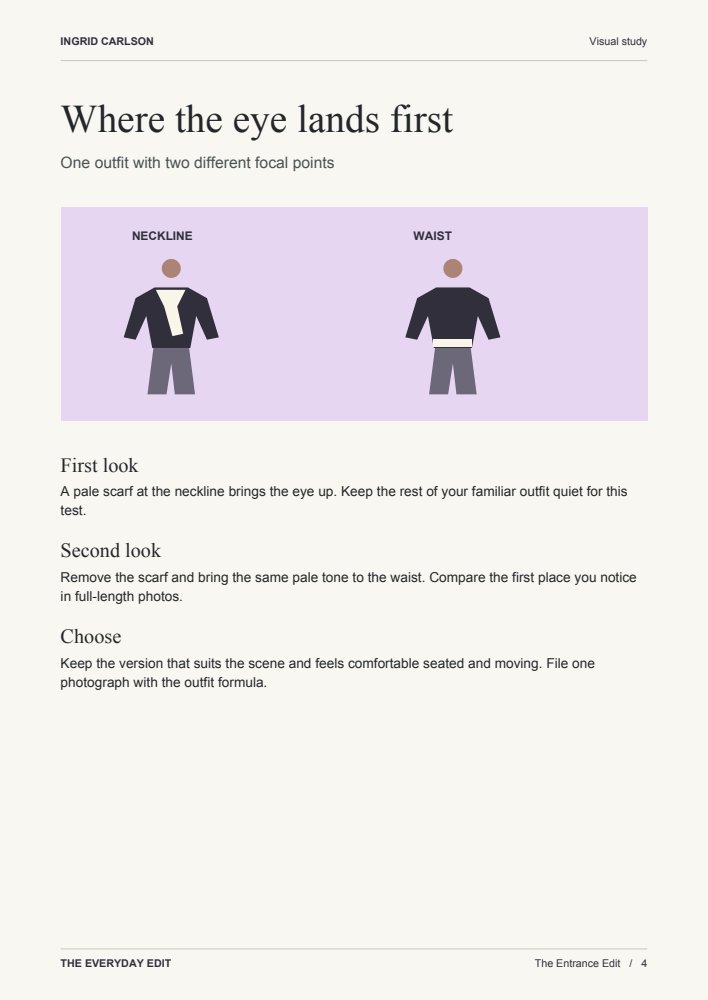
Where the eye lands first
Read page 4 as text
First look
A pale scarf at the neckline brings the eye up. Keep the rest of your familiar outfit quiet for this test.
Second look
Remove the scarf and bring the same pale tone to the waist. Compare the first place you notice in full-length photos.
Choose
Keep the version that suits the scene and feels comfortable seated and moving. File one photograph with the outfit formula.
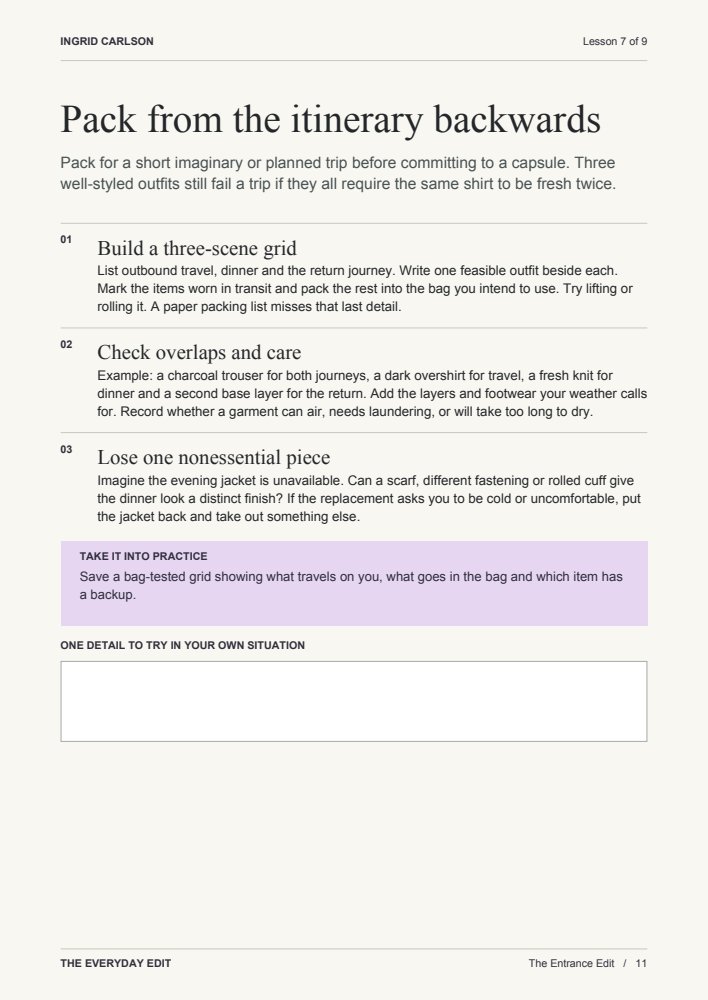
Pack from the itinerary backwards
Read page 11 as text
Pack for a short imaginary or planned trip before committing to a capsule. Three well-styled outfits still fail a trip if they all require the same shirt to be fresh twice.
Build a three-scene grid
List outbound travel, dinner and the return journey. Write one feasible outfit beside each. Mark the items worn in transit and pack the rest into the bag you intend to use. Try lifting or rolling it. A paper packing list misses that last detail.
Check overlaps and care
Example: a charcoal trouser for both journeys, a dark overshirt for travel, a fresh knit for dinner and a second base layer for the return. Add the layers and footwear your weather calls for. Record whether a garment can air, needs laundering, or will take too long to dry.
Lose one nonessential piece
Imagine the evening jacket is unavailable. Can a scarf, different fastening or rolled cuff give the dinner look a distinct finish? If the replacement asks you to be cold or uncomfortable, put the jacket back and take out something else.
Save a bag-tested grid showing what travels on you, what goes in the bag and which item has a backup.
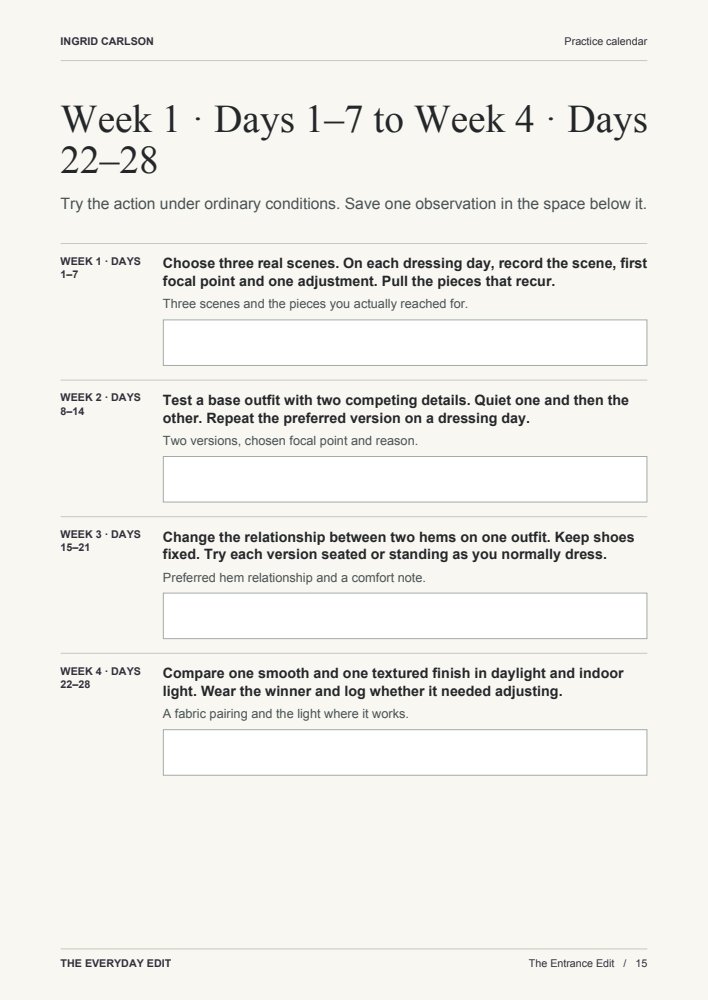
Practice calendar
Read page 15 as text
Week 1 · Days 1–7
Choose three real scenes. On each dressing day, record the scene, first focal point and one adjustment. Pull the pieces that recur. Three scenes and the pieces you actually reached for.
Week 2 · Days 8–14
Test a base outfit with two competing details. Quiet one and then the other. Repeat the preferred version on a dressing day. Two versions, chosen focal point and reason.
Week 3 · Days 15–21
Change the relationship between two hems on one outfit. Keep shoes fixed. Try each version seated or standing as you normally dress. Preferred hem relationship and a comfort note.
Week 4 · Days 22–28
Compare one smooth and one textured finish in daylight and indoor light. Wear the winner and log whether it needed adjusting. A fabric pairing and the light where it works.